
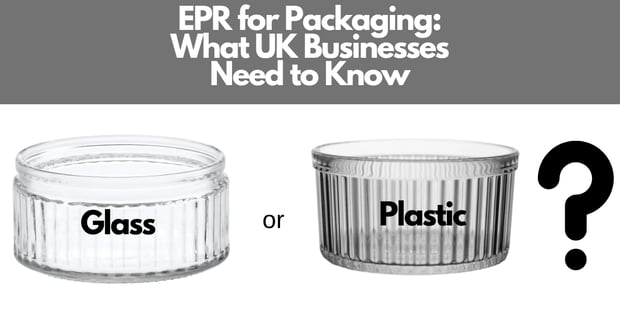
EPR costs are influenced by packaging material, weight, and recyclability, making material choice an increasingly important business decision.
Extended Producer Responsibility (EPR) for packaging is one of the most significant regulatory changes affecting UK brands, retailers, and packaging suppliers. Its purpose is simple: to ensure that those who place packaging on the market take financial responsibility for the environmental impact of managing that packaging at end‑of‑life.
Below is a practical, business‑friendly overview of what EPR is, who pays, how much it costs, and how companies can mitigate those costs - including through lighter‑weight materials.
What is EPR?
Extended Producer Responsibility (EPR) is a UK‑wide policy requiring packaging producers to fund the full net cost of managing household packaging waste. This includes collection, sorting, recycling, and disposal.
According to the official guidance, the fees paid by producers “cover PackUK costs and provide local authorities with additional income to cover the cost of recycling and disposal of waste packaging materials”. PackUK is the UK’s official scheme administrator for Extended Producer Responsibility (pEPR) for packaging, managing packaging waste fees and recycling initiatives on behalf of the four UK nations.
EPR replaces the previous system of Packaging Waste Recovery Notes (PRNs) for household waste, shifting more responsibility - and cost - onto producers.
Who needs to pay EPR?
Any organisation that supplies or handles packaging in the UK may be obligated. This includes:
- Brand owners placing packaged goods on the UK market
- Importers bringing packaged goods into the UK
- Distributors and retailers supplying packaged products
- Online marketplaces
- Packaging manufacturers supplying empty packaging
Producers must report their packaging data through the Report Packaging Data (RPD) portal, and large producers had to submit data for 1 January–30 June 2025 by 1 October 2025.
What is the cost of EPR?
EPR fees are charged per tonne, based on the material type. The 2025–2026 base fees (year 1 of the scheme) are:
|
Material |
Fee per tonne |
|
Aluminium |
£266 |
|
Fibre‑based composite |
£461 |
|
Glass |
£192 |
|
Paper & card |
£196 |
|
Plastic |
£423 |
|
Steel |
£259 |
|
Wood |
£280 |
|
Other materials |
£259 |
 Richard Drayson, Aegg’s Sales and Marketing Director, said: “At first glance, plastic EPR fees can appear significantly higher than glass fees. However, because plastic packaging is much lighter, the cost per unit can be more competitive than the headline rate suggests.
For example, our 140ml recyclable PP plastic ramekin weighs 13.1g, compared with 125g for our 140ml glass ramekin. Customers therefore need to consider the full picture: EPR costs, pack weight, recyclability, and the look and feel they want to achieve. Glass ramekins can deliver a more premium presentation, making them a strong choice for products such as premium seafood or desserts, while recyclable plastic can offer a lightweight, practical alternative where cost is a more important consideration.”
These fees are calculated using a model that considers:
- Local authority waste management costs
- Revenues from material sales
- PackUK administrative and communication costs
- Debt provision costs
From 2026 onwards, fees will be modulated based on recyclability, with red‑rated materials costing more and green‑rated materials costing less.
How can businesses mitigate EPR costs?
EPR costs are directly linked to material type, weight, and recyclability. This means businesses have several levers to reduce their financial exposure.
1. Review lighter‑weight materials (lightweighting)
Because EPR fees are charged per tonne, reducing packaging weight has a direct cost benefit. For example:
- A 10g reduction across 1 million units saves 10 tonnes of material.
- At £192/tonne for glass, that’s £1,920 saved.
- At £423/tonne for plastic, that’s £4,230 saved.
Lightweighting must be balanced with performance, but even small reductions deliver meaningful savings.
Richard Drayson added, “To support customers with their EPR decision-making, we have updated our glass packaging catalogues to clearly identify lighter-weight products, helping them compare options more easily and make informed packaging choices.”
2. Switch to more recyclable materials
From 2026, modulated fees will reward green‑rated (highly recyclable) packaging and penalise red‑rated materials. Choosing materials with strong recycling infrastructure - such as glass, aluminium, or widely recycled plastics - will reduce future costs.
3. Improve packaging design for recyclability
Design choices matter. You can reduce costs by:
- Avoiding problematic components (e.g., dark plastics, composite materials)
- Using mono‑materials
- Ensuring labels, closures, and adhesives are recycling‑friendly
4. Ensure accurate packaging data reporting
Regulators are actively checking RPD submissions and adjusting for missing or incorrect data. Accurate reporting prevents over‑charging and compliance issues.
5. Work with suppliers who offer EPR‑friendly options
Many packaging suppliers now highlight:
- Lightweighted products
- High‑recyclability materials
- Clear recyclability ratings
- Lower‑impact alternatives
This makes it easier to choose packaging that reduces your EPR liability.
Final Thoughts
EPR represents a major shift in how packaging costs are allocated, but it also creates opportunities. Businesses that proactively review packaging weight, recyclability, and material choices will not only reduce costs but also strengthen their sustainability credentials.
Richard Drayson added, “We understand that customers need to consider a range of factors when assessing the impact of EPR costs on their packaging choices. Our role is to guide them through those options and help identify the most suitable solution for their product, budget, and sustainability goals. Please get in touch with us to discuss your specific requirements.”
Resources:
UK Extended Producer Responsibility (EPR) for Packaging | Net Zero Compare
Sustainability regulations: UK & EU sustainability regulations 2026: Legal compliance guide
EPR Calculator: UK EPR Calculator | Extended Producer Responsibility Fee Estimator

.png?width=620&height=372&name=Blog%20images%20(29).png)